Fourteen Days Off CBD: A November Diary of Sleep, Stress and a Surprisingly Full Wallet
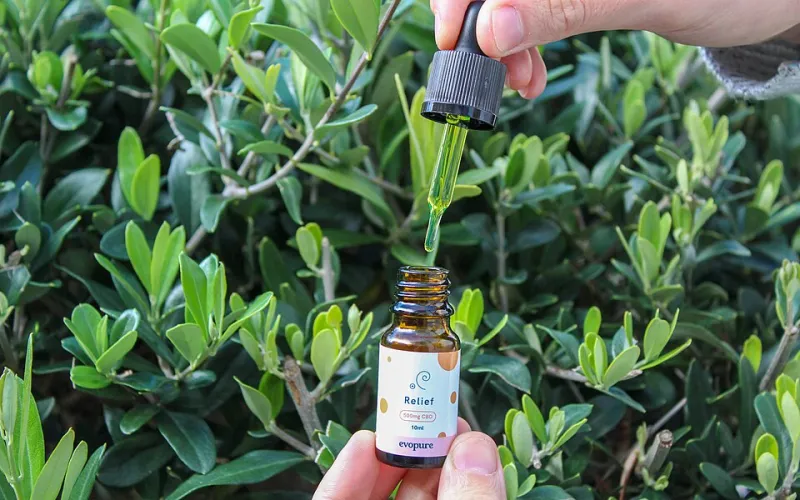
Photo: Evopure, CC BY-SA 2.0, via Wikimedia Commons
On the last Sunday in October I put my bottle of CBD oil at the back of a kitchen cupboard, set a phone reminder for 14 days' time, and braced myself for something dramatic. I'd been taking CBD most evenings for the best part of two years — nothing exotic, 15 to 20mg under the tongue, bought from a shop in Leeds that publishes lab reports. I wasn't expecting a crisis. I was expecting to notice something.
I didn't get drama. I got something more useful: a clearer view of what CBD had actually been doing for me, which turned out to be rather less — and rather differently — than I'd assumed.
The ground rules
Three of them, because I didn't want to turn a fortnight into a research project.
First, I kept everything else the same. Same bedtime, same gym routine, same slightly chaotic inbox. Second, I logged one line each morning in a notes app — how I slept, roughly how I felt, nothing poetic. Third, I didn't swap the CBD for anything else. No new tinctures, no magnesium, not even a hopeful pint of chamomile.
One disclaimer before the diary: this is one person's experiment, not a clinical trial, and I'm not a health professional. If you're on prescription medication, the safety notes near the end matter more than anything I report about my own fortnight.
Days one to three: the phantom bottle
Here's the thing nobody warns you about. Nothing happened.
I expected to feel edgy on night two. Instead I felt exactly as I usually do — which is to say, mildly wired about work and slightly too fond of my phone in bed. By day three I caught myself standing in front of the cupboard at 9.45pm out of pure habit, reaching for a bottle that wasn't coming out.
That was the first real finding. A lot of what I called my CBD routine was a punctuation mark at the end of the day: a small ceremony that said work is over now. The oil may or may not have been doing something. The ritual definitely was.
Days four to seven: the sleep question
I'd told anyone who'd listen that the oil helped me sleep. So what happened when it went?
Honestly? My sleep was slightly worse for three nights, then roughly back to normal. Not the insomnia cliff-edge I'd half-anticipated. My fitness tracker did the usual tracker thing and informed me my deep sleep was 4% down, which is exactly the kind of number that means very little in isolation.
What I did notice was how often I'd been using the evening dose as a reason not to fix the obvious stuff — the laptop in bed, the late caffeine, the scroll that starts at 10.30pm and ends somewhere around midnight. When the oil was gone, the actual causes were still sitting there. Less comfortable to look at, but more useful.
Days eight to eleven: stress, but not the kind I planned for
I'd picked a quiet fortnight on purpose. Then a work deadline moved, a boiler decided to make a noise, and November did its November thing of being dark by half four.
I felt stressed on those days. I'd have felt stressed with the oil too. What I did notice was that I reached for the cupboard again on day nine without thinking, and the reaching was faster than the deciding. Which suggests my habit was doing more of the work than I'd credited.
No shakiness, no headaches, no flu-like anything. If you've read about withdrawal symptoms and are worrying, it's worth knowing CBD doesn't hit the same receptors as THC — the classic cannabis withdrawal picture isn't really the right frame here. More on that below.
Days twelve to fourteen: the money bit
This is where the pause got genuinely interesting.
My bottle costs £35 a month and lasts me roughly 30 days at 15mg a night. Two weeks off: about £17.50 unspent. That's a cinema trip, or barely a round of drinks in London. Not life-changing on its own.
But it reframed the £420 a year I was quietly spending on a product I'd never properly audited. Do I get £420 of value? Maybe. But I'd never actually asked the question, which is a strange way to buy anything, let alone something I was treating as a health purchase. If you've ever opened your bank app, searched a shop name and felt your eyebrows go up, you'll know the feeling.
What the evidence does and doesn't say
Here's where I have to be straight with you, because this is the part my diary can't answer.
Most of the promising CBD research uses doses well above what's sold on the high street — often 150mg to 600mg a day in anxiety and sleep studies. A 15mg evening dose is not that. A lot of the trials are small, short, and mixed in their results. UK regulators have not approved CBD as a medicine for anxiety or insomnia, and the official line from NICE is essentially: not recommended outside research settings.
On tolerance breaks specifically, there's very little good evidence that CBD creates the kind of dependence that needs tapering. Some small studies have reported mild discontinuation-type effects — irritability, odd sleep — in people stopping higher daily doses, but the picture is thin and fuzzy. The more common phenomenon is probably the one I just lived through: a habit unwinding, not a drug leaving your system.
One practical note worth flagging: the Food Standards Agency advises healthy adults not to exceed 10mg of CBD a day, and advises against using CBD at all if you're pregnant, breastfeeding, or taking medication, unless a doctor says otherwise. My 15 to 20mg was above that line. I'm not proud of it, and it's one reason I've since come down.
When to speak to a GP
A tolerance break is a low-stakes experiment for most healthy adults. But there are moments when a diary isn't the tool you need.
Book an appointment if your anxiety or low mood gets worse and doesn't settle, if sleep problems drag on for more than a few weeks, or if you were using CBD to manage something you'd never actually had looked at. Speak to a GP or pharmacist before starting or stopping if you take any prescription medicine — CBD can affect how the body processes certain drugs, including blood thinners, epilepsy medications and some immunosuppressants, and the interaction cuts both ways.
And if the honest reason you're reading this is that the CBD spend has crept up to a number you'd rather not say out loud, that's worth a conversation too. Nobody should feel judged about it, but it's a signal, not a personality flaw.
What I'm doing now
I've gone back to CBD, but differently. Lower dose — 10mg — three or four nights a week rather than every night. I buy from brands that publish batch lab reports with dates on them. And I've booked a two-week pause into next autumn as a check-in, the same way you'd look at any other monthly subscription that's quietly been running for years.
The most useful thing the fortnight gave me wasn't a result. It was a question I'd never asked: is this still doing something, or have I just stopped noticing?