What It Actually Takes to Grow UK Hemp: Notes from a 2026 Harvest
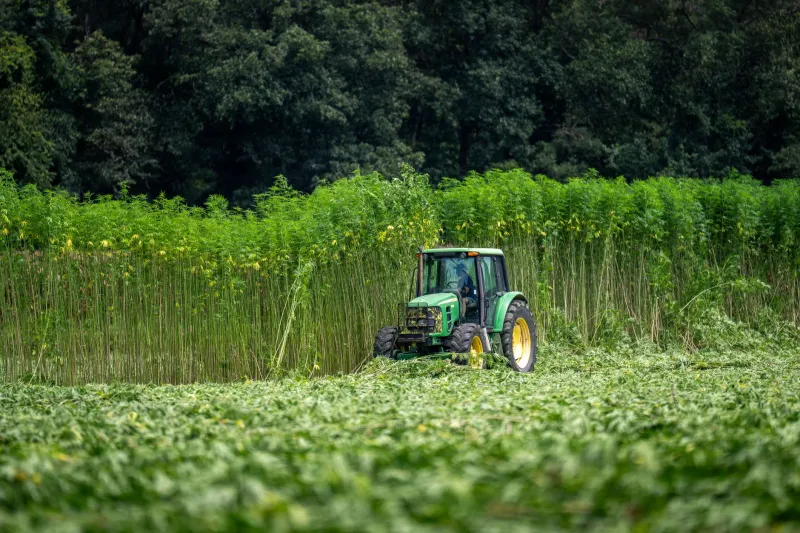
Ask a room of shoppers to picture a hemp farm and most will imagine a golden field, a wholesome breeze and perhaps a farmer smiling at the camera. The reality in the UK in 2026 is a lot more paperwork, a lot more weather-watching and a fair few cups of tea. We caught up with a licensed grower in the South East who agreed to talk us through the season on condition we did not name the farm. What follows is a practical harvest diary, not a romantic advert.
The licence comes before the land
Before a single seed goes in, there is the small matter of a Home Office licence. UK hemp growers need one to cultivate the crop, and the rules are strict. The plants must come from approved varieties, and the crop has to stay within the legal THC limit of 0.2%. If a field tests too high, it can be destroyed. That is not a hypothetical risk; it is the reason growers talk about testing the way other people talk about MOTs.
Our grower has been at it for six seasons. He describes the licence application as 'the least glamorous part of the job, but the one that keeps you legal'. CBD extraction is regulated separately from hemp cultivation, which is why some British fields are grown for seed and fibre rather than for cannabinoid-rich flowers. The paperwork shapes the whole plan: which variety, which field, which buyer.
Sowing into a British spring
The 2026 spring was, in his words, 'a stop-start affair'. Hemp likes warmth, but it is not a hothouse plant. The aim is to sow once the soil has warmed enough and the risk of a late frost has mostly passed. This year that meant waiting through a cool, damp patch in late April while neighbouring farms were already busy.
Hemp is sown densely. The idea is to create a canopy that shades out weeds, because nobody wants to spend July wrestling with thistles. It is a low-input crop in many respects, which is part of its appeal. But low input does not mean no input. Seed costs money, diesel costs money, and the weather can still wipe out a chunk of your margin before summer begins.
Summer: weather, weeds and worrying
Through June and July, the grower walks the field most days. He is looking for signs of stress, pest damage and the dreaded rogue male plants. Hemp is dioecious, meaning male and female flowers can grow on separate plants. For seed and fibre crops, that is fine. For flower-focused crops, the aim is usually to keep the females unpollinated so they produce the resin that buyers want.
This summer brought a hot spell followed by heavy rain. 'You cannot control it, so you stop trying to control it,' he says. 'You just try to make sure the ground drains and the plants are not sitting in a bath.' The field has a mix of hemp varieties, partly as an insurance policy. Some handle dry spells better than others; some finish earlier. The 2026 harvest was not a record-breaker, but it was solid enough to keep the farm's small team busy.
Harvest is a mad dash
Hemp harvest is not like combining wheat. The crop is bulky, the fibres are tough and the window is tight. The grower's team cuts and gathers in stages, watching the forecast like hawks. Rain at the wrong moment can knock down quality and make drying far harder.
The first week of November 2026 still has the barn smelling of green, earthy hemp. The harvest is mostly in, though some later plants are being left to finish. 'You want it down before the weather turns properly grim,' he says. 'But you also want it mature enough to be useful. That balance is the whole job.'
Drying is the quiet make-or-break
If there is one part of the process that shoppers never see, it is drying. Get it wrong and you can lose a crop to mould or degrade the very thing buyers are paying for. The farm uses a ventilated barn and monitors moisture carefully. It is not a quick process. It is also where energy bills bite.
This is where some sustainability claims get complicated. Hemp itself can be a low-input crop, and it can fit into rotation well. But drying, processing and transport all use energy. A British-grown crop may cut down on long-distance shipping compared with imported material, but it is not automatically a zero-impact product. The grower is refreshingly blunt about this: 'We try to be honest. It is a good crop. It is not a magic crop.'
From barn to brand
Once dried and tested, the material goes to buyers. Some goes into seed for food. Some goes to processors working with wellness brands. The grower sells to a mix of UK companies, and he says demand has shifted in recent years. Buyers ask more questions now: where was it grown, how was it dried, what were the test results, and can you prove it?
That is good news for shoppers. The trend towards local hemp is not just a flag-waving exercise. Shorter supply chains can mean better traceability, and British growers are often more accountable to UK regulations and UK customers. But it also means buyers need to read carefully. 'UK grown' on a label is a starting point, not a full story.
What local hemp means for shoppers
At Hemphorus, we are interested in hemp wellness that makes sense for everyday UK living. Local hemp is part of that picture, but it is not a free pass. Look for clear batch testing, sensible claims and brands that can tell you where their material comes from. Ask whether the product is made from seed, fibre or flower, because those are very different supply chains.
There is also a bigger prize here. Hemp can be a useful break crop, it can support soil health when managed well, and it gives UK farmers another outlet beyond the usual rotation. That does not mean every field should be hemp. It means the crop deserves a fair hearing, without the hype.
The honest takeaway
The 2026 harvest was not a viral TikTok moment. It was a year of paperwork, muddy boots, moisture meters and cautious optimism. The grower is already thinking about next spring, which tells you something. 'You have to like it,' he says. 'Because it is not an easy way to make a living.'
For consumers, that is worth remembering. Local hemp can be a genuinely good choice, but it is a choice built on real farms, real regulations and real trade-offs. The more we understand that, the better we can shop.