Caddy Confusion: What Actually Happens to Your CBD Bottle After Bin Day
There's a specific moment, somewhere around 9pm on a Sunday, when you rinse out an empty CBD bottle, look at the little glass body, the rubber-topped pipette and the cardboard sleeve it came in, and think: right, which bin?
It should be a two-second decision. In practice it's the least glamorous part of buying hemp wellness, and the part where a lot of confident-sounding packaging copy quietly falls apart. So let's walk through it properly — no lecturing, just what your council is actually likely to do with the thing once the lorry pulls away.
First, a reality check on "hemp packaging"
Here's the bit that surprises people: most CBD packaging sold in the UK has nothing to do with hemp fibre. The amber bottles are glass. The droppers are usually PET or HDPE with a synthetic rubber bulb. The pouches are multi-layer laminates — often a foil or metallised layer sandwiched between plastic films — because that's what keeps oil fresh and stops it leaking in a delivery van.
Hemp-based packaging does exist. You'll see hemp hurd and hemp fibre used for rigid boxes and inserts, and hemp paper for labels and sleeves. A small number of brands talk about plant-derived bioplastics, which is usually polylactic acid (PLA) made from maize or sugarcane rather than hemp. All of it is genuinely interesting. None of it automatically means "put me in the recycling."
The four bits you're actually holding
Almost every CBD order breaks down into the same small pile:
- The bottle. Amber or violet glass, occasionally rPET plastic, sometimes a pump or spray rather than a dropper.
- The dropper. A glass or plastic pipette with a rubber squeeze bulb and a screw collar.
- The outer carton. Kraft board, often with a hemp-print finish and a thin plastic window.
- The pouch or sachet. If you bought a balm, a softgel pack or a sample, you'll have one of these instead — and they're the problem child of the whole collection.
"Compostable" is not an instruction to your council
This is the crux of the puzzle. A compostable label usually refers to one of two standards. EN 13432 means a material breaks down in industrial composting conditions — sustained high temperatures, controlled airflow, the kind of setup you find at a commercial facility. "Home compostable" certifications (TÜV OK Compost HOME and similar) are a separate, tougher test.
Almost no UK council collects compostable packaging at the kerbside. Food waste collections take food waste; garden waste collections take garden waste. A compostable CBD pouch dropped into either is a contaminant, and it will be pulled out or sent for energy recovery. Your home compost heap can technically take home-compostable material, but only if it's actually certified for it and your heap gets genuinely hot — a cool, sludgy November bin isn't the same thing.
The other trap is the word "biodegradable." On its own it means very little. Lots of things biodegrade eventually. That's not a disposal route.
What your kerbside will realistically accept
Rules vary by council, and they genuinely do change, so treat this as the general shape rather than gospel for your postcode:
Glass bottles and jars are collected at the kerbside by the large majority of UK authorities. Amber glass is usually fine; a few councils ask for it separated by colour, so it's worth thirty seconds on your council's waste page. Rinse it. You don't need to scrub it.
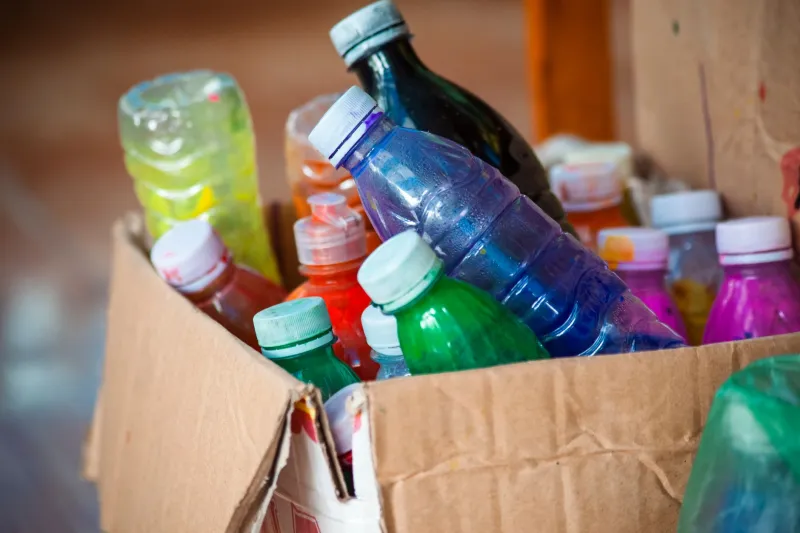
Plastic bottles — rPET and HDPE included — are widely collected, and current on-pack guidance from OPRL is to leave the cap on and give it a squeeze rather than flattening it right down. Lids on keeps small items out of the sorting machinery.
Cardboard cartons are standard. Remove any plastic window first, and flatten it.
Pouches, sachets, multilayer films and bioplastic tubs are not collected kerbside in the vast majority of areas. Many larger supermarkets run front-of-store soft plastic collection points, and some now take flexible packaging that kerbside won't. That's often the best route for a pouch — check the store's own signage, because what's accepted has shifted a lot in recent years.
Pipettes are the fiddly one. The glass or plastic stem can sometimes go with the matching stream, but the rubber bulb should come off and go in general waste. Most recycling plants can't separate a soft rubber teat from a glass tube, and it'll be screened out as contamination.
What the sorting plant actually sees
Once the lorry tips, your recycling goes into a materials recovery facility. There's a lot of mechanical sorting — trommels, magnets, eddy currents, near-infrared scanners that identify plastic by polymer type — plus a fair bit of human picking at the front end.
Bioplastics are a known headache here. PLA looks a lot like PET to the eye and sometimes confuses optical sorting, which means it can end up in a bale of ordinary plastic and weaken the recycled material. Compostable films snag machinery. Pouches wrapped around a bottle will drag it out of circulation. This isn't the plant being difficult; the system was built for a narrow set of shapes and materials, and anything outside that set costs somebody money.
So the practical rule is blunt: if you're not confident, don't guess. "Wishcycling" — putting things in the recycling bin in the hope they belong there — does more damage than binning it honestly.
So which bottles survive the trip?
Ranked roughly from easiest to hardest to dispose of well:
- Standard 10ml amber glass bottle with a glass pipette. Best case. Rinse, cap off the pipette, bulb in general waste, glass in the kerbside box.
- rPET plastic bottle with a pump. Straightforward where plastic bottles are collected. Pump mechanisms often need separating — check the brand's own instructions if they publish them.
- Kraft carton with hemp-print finish. Fine as cardboard once the window is out.
- "Compostable" pouch or sachet. Worst case. Unless it's certified home compostable and you have a working heap, it's general waste or a supermarket drop-off.
A thirty-second disposal checklist
- Empty and rinse — a quick swill is enough.
- Pull the pipette bulb off and bin it separately.
- Leave caps on plastic bottles; keep them with the bottle.
- Take plastic windows out of cardboard sleeves.
- Never put pouches or bioplastic tubs in the kerbside recycling.
- Check your council's page once a year — it changes more often than you think.
- If a supermarket near you takes soft plastics, that's your pouch route.
The bit that saves you the faff
The most effective packaging decision happens before checkout, not after. Bigger bottle sizes mean fewer bottles per year. Refill schemes and concentrate drops, where a brand sells a small bottle you top up, cut packaging volume dramatically. A handful of UK brands now publish packaging breakdowns per component — what each part is made of and where it should go — and that's worth rewarding with your money.
And be sceptical of a single word doing heavy lifting on a label. "Compostable" without a certification mark and a clear disposal instruction is decoration. "Eco bottle" means nothing. "Plant-based plastic" tells you the feedstock, not the fate.
None of this is a reason to feel bad about your dropper. It's a reason to be a slightly sharper shopper, and to give your council's recycling page the same scrutiny you give a lab report. Bin day is the last step in a supply chain — and the only one you actually control.